Gorilla trekking in Rwanda
All you need to know about Gorilla trekking in Rwanda
Just under three hours from Kigali, your Rwanda Gorilla safari will get you to the beautiful Musanze town backdropped with the majestic Virunga volcanoes. Volcanoes National Park is the highlight of this town, and is high on the list of luxury gorilla trekking on the continent. From the calm people, through the rolling hills to the Volcanoes National park that offers closer breathtaking views of the mountains, Rwanda is a country best enjoyed at least with a gorilla trek. Here, village walks, the twin lake visit, biking, hiking, and mountain climbing on Mt. Bisoke call out to adventurous travellers.
Located in the western region of Rwanda, Volcanoes National Park is part of the Virunga Massif which is complete with Uganda’s Mgahinga National Park and DRC’s Virunga National Park. Volcanoes National Park currently houses about 30% of the world’s total population of mountain gorillas. Gorilla treks here are typically shorter than those in Uganda, though longer treks are still possible.
Here are some essential insights to keep in mind when planning a gorilla trek in Rwanda
The price of a gorilla permit in Rwanda
Generally, Rwanda is a luxury destination with its prices being significantly higher than most of the other African destinations. Speaking of the gorilla permit in Rwanda, it costs $1,500, which is almost twice the price of the gorilla permit in Uganda. It is absolutely worth every penny, the entire experience, the pristine environment, and the fresh mountain air here offer a true sense of luxury.
How to acquire a gorilla permit in Rwanda
The most reliable and convenient way to obtain a gorilla permit is contacting an East African tour operator. At Wonder Wheels, we are happy to always assist with this service anytime of the year. We always advise our potential clients to make their bookings at least three months prior to their travel dates as the permits are always on high demand especially during the high season.
The best time to go for gorilla trekking in Rwanda
The best time to visit Rwanda for gorilla trekking is during the dry season when trails in the forest are dry and easy to go through. This makes the trek easier and less exhausting. On rainy days, some gorilla families tend to move closer to starting points, making them easier to spot. However, for those gorilla families that seem to move far in the forest during the wet season, the trek becomes a muddy, rugged journey, and this adds to the thrill of a truly authentic adventure.
Requirements for gorilla trekking in Rwanda
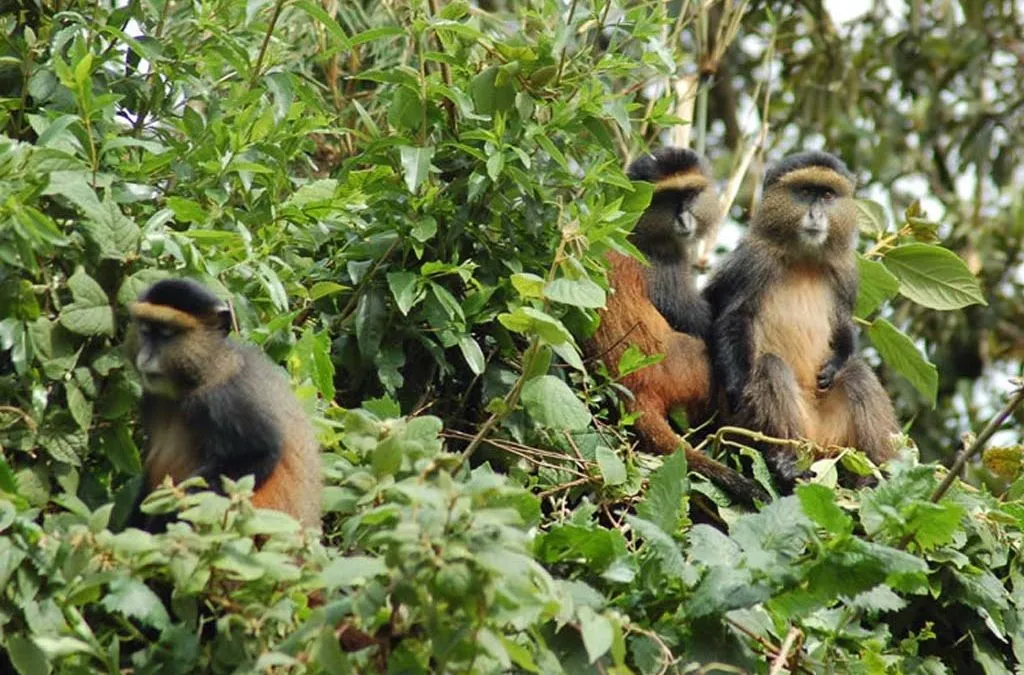
During consultation with your local tour operator, you will receive guidance on essential preparation for you to have a smooth gorilla safari in Rwanda. First and foremost, you will be advised to share your passport copies to have permits secured. The same passports must be carried along on the day of trekking. The minimum age of gorilla trekking is 15 years. However, children below this age can have an exciting Rwanda safari experience by participating in golden monkey trekking.
What to pack for gorilla trekking in Rwanda
Contrary to what you may have in mind especially if you are planning to travel during the dry or high season, Musanze can receive rain and experience chilly weather at any time of year. While light clothing is suitable for city tours and transfers to and from Musanze, you will need a different set of gear for the trekking day: a long-sleeved shirt or t-shirt, long trouser, thick pair of socks, light weight sweater, rain jacket, trekking shoes and a waterproof backpack.
How long does a gorilla trek last in Rwanda
Right at the borders of Volcanoes National Park, just a few minutes from the trekking start point, one group of trekkers may unexpectedly come meet their allocated gorilla family, surprisingly! Meanwhile, another group could spend hours navigating the forest in search of theirs. Since this is a natural habitat of the mountain gorillas, they roam to any location and their movements determines the duration of the trek. Some treks will be short while others longer. However, the trackers in the park usually find out where these apes spent their last night to estimate where they could easily be found. Guests with mobility challenges or health concerns can request to visit gorilla families that are known to have stayed closer to the trailheads.